
Distressed Antique-White Cabinets: A French-Country Before & After
A hand-distressed, antique-white finish turns ordinary wood cabinets into a warm, lived-in French-country kitchen that looks like it has been beautifully aging for decades. In this project, a kitchen of dated honey-toned cabinets was refinished in a soft antique white and then intentionally distressed and antiqued by hand, paired with a contrasting dark island, for a custom, old-world look that you cannot get off a showroom shelf.
Before
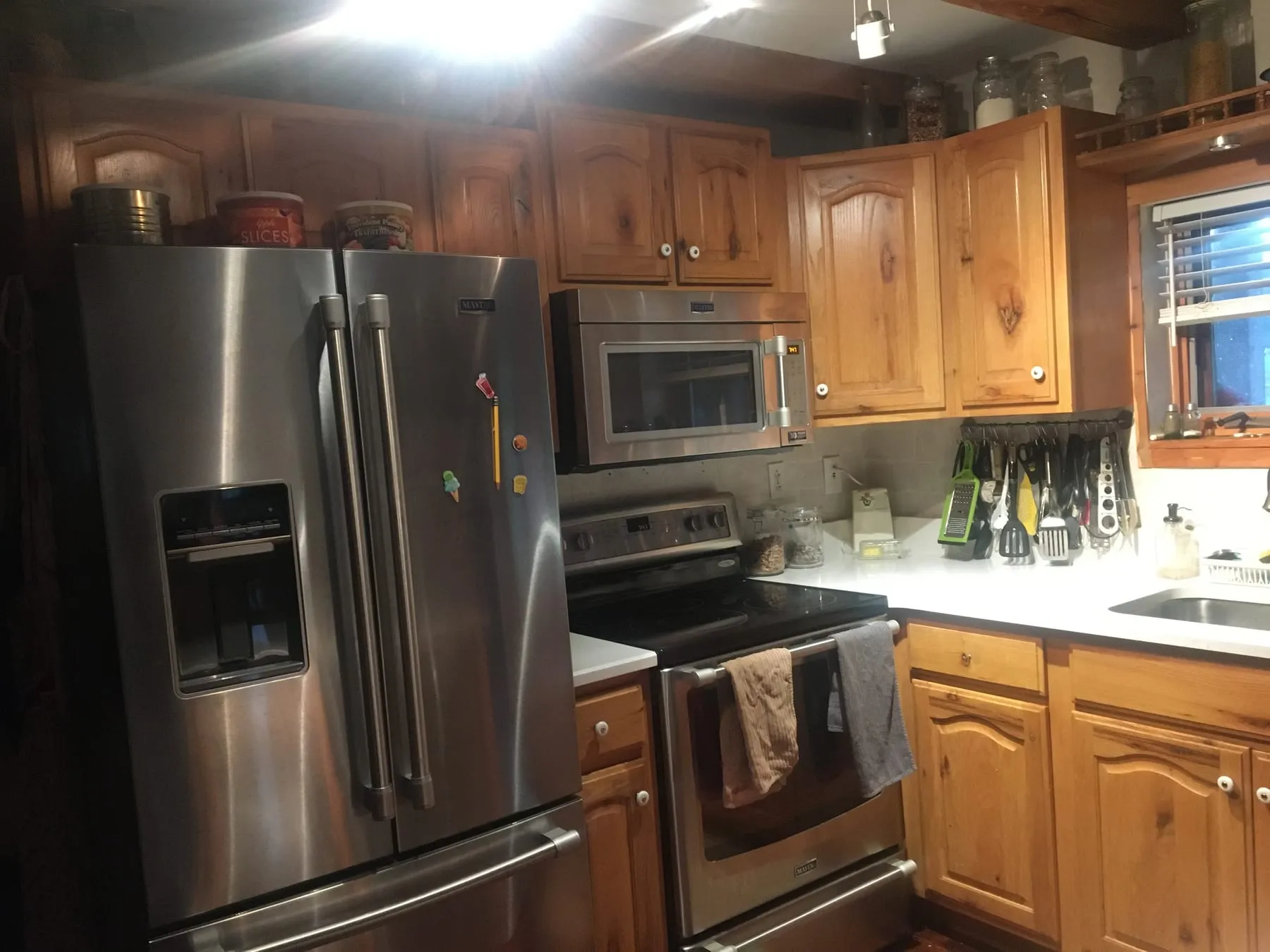
The kitchen had warm honey-and-knotty wood cabinets with raised cathedral-arch panels. They were solid and well-built, but the orange-toned wood made the kitchen feel dark and dated, and a brand-new set of matching cabinets in this style would be expensive.
After
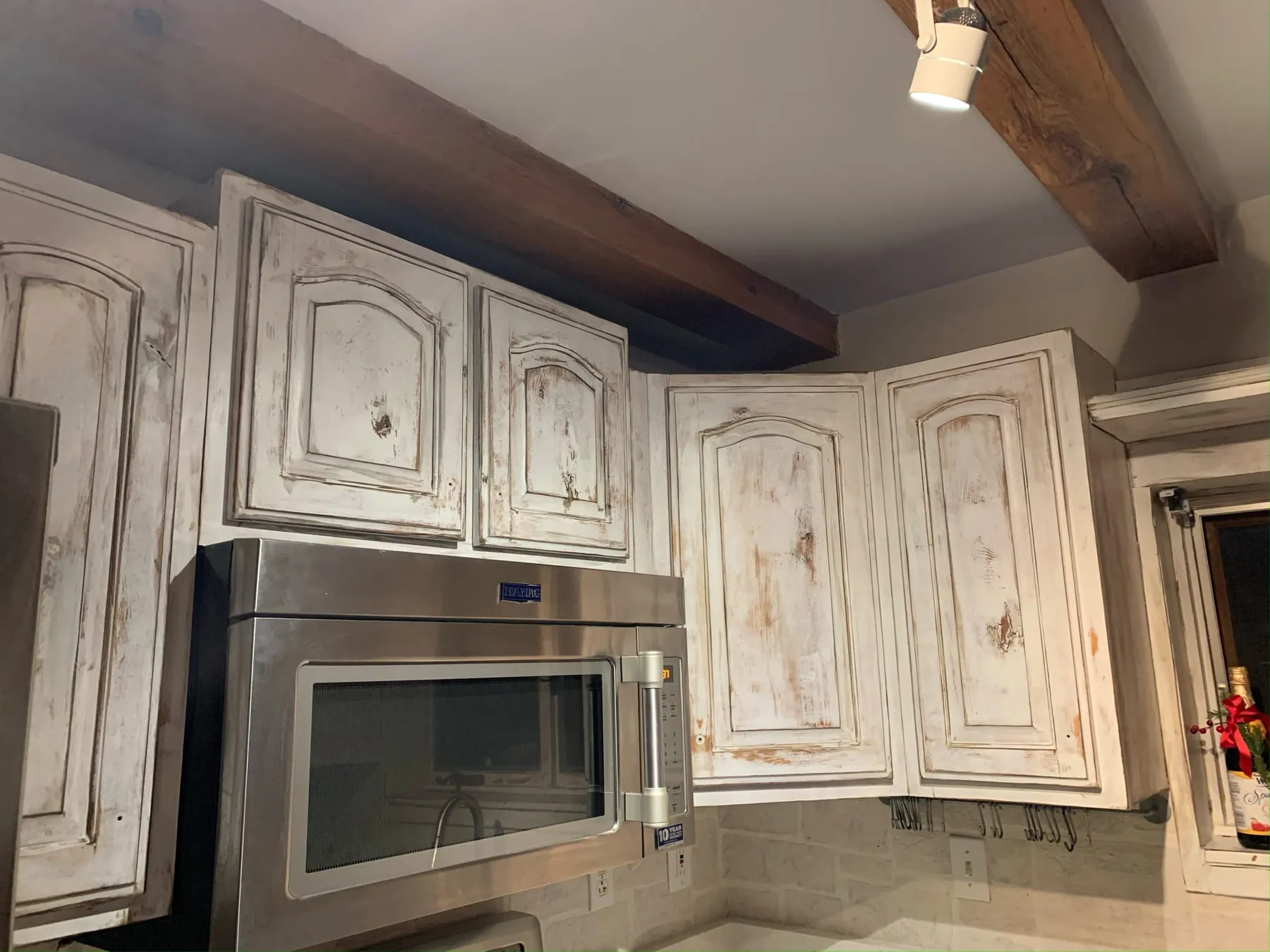
The same cabinets now wear a soft, antique-white finish that has been deliberately distressed: the edges and details are gently worn back and the recesses are antiqued so the doors look genuinely time-worn, in the best way. Set against a contrasting dark island and a wood-plank backdrop, the kitchen now reads as a warm, collected, French-country space, full of character rather than dated. This is a finish defined by craft, not just color.
How a distressed, antiqued cabinet finish is created
A distressed antique finish is the opposite of a flat, uniform paint job: the goal is intentional, controlled imperfection, which takes a practiced hand. The general approach is:
- Prep and prime the cabinets the same way any quality cabinet job starts, with degreasing, sanding, and a bonding primer so the finish lasts.
- Apply the base color, the soft antique white.
- Distress by hand. Once the base is on, edges, corners, and raised details are gently sanded or worked back so a hint of what is underneath shows through, mimicking decades of natural wear in the spots where a real antique would wear.
- Antique with a glaze. A tinted glaze is worked into the crevices, profiles, and recessed panels, then wiped back, which settles darker in the details exactly the way age would. The paint-to-glaze ratio controls how subtle or heavy the aging looks.
- Seal it. A clear, non-yellowing sealer protects the finish, since standard sealers can yellow over a white base.
Because every door is distressed and glazed individually, no two are identical, which is what makes the look feel authentic rather than mass-produced.
Is a distressed finish the same as an unfinished one?
No, and this is the important part: a true distressed finish is a deliberate, skilled technique. The worn edges and antiqued recesses are placed on purpose to imitate natural aging, then sealed to protect them. It is one of the more involved cabinet finishes precisely because it has to look effortlessly old without looking sloppy.